
Shankar Prajapati, a 57-year-old potter in Dharavi, has given up hope of getting a bigger house for his family. He lives cheek by jowl in a hutment measuring 200 square (sq.) feet (ft) in the nondescript shanty town. "We have surrendered to our fate. We cannot wait forever for better accommodation. "Perhaps we are not meant to dream big," despairs Prajapati. Raju Korde, president, Dharavi Redevelopment Committee, and a local resident, agrees with Prajapati.
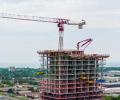
The NCR and the MMR together account for 77 per cent of 10 big housing projects stuck because of developers' bankruptcy or litigation.

'After Covid, people started looking for bigger houses with pools and landscaped gardens.' 'Even middle class buyers are looking at plots of land in smaller towns.'
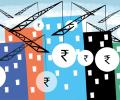
A 5% increase is expected due to additional interest on approval costs.

After years of living with his family in a poky 110 sq. ft. 'house', textile worker Sambhaji Surve dreams of moving into a home four times the size once the Maharashtra government starts its ambitious redevelopment of the 39-acre Kamathipura shanty town in south-central Mumbai. Sharing his dream are about 8,000 other families hoping for a better life when the redevelopment project, part of the government's effort to redevelop old settlements and make life more livable for some residents, gets underway. The Shiv Sena-Nationalist Congress Party aims to redevelop BDD Chawl and Dharavi but for Surve all the matters is Kamathipura where he arrived in the 1970s from Nasik to work in a textile mill. Kamathipura was originally built 150 years ago following construction of a causeway to connect the seven islands of Mumbai. From the British Raj to post-independence, it became infamous for slums and brothels.
Property registrations in Mumbai hit the 100,000-mark till November, marking a 10-year high as "demand enablers" like low prices and cheaper interest rates lure people to buy homes in India's financial capital. The previous 10-year high was 80,746 units in 2018. November 2021 recorded property sale registrations of 7,582 units: an 18 per-cent decline compared to same month last year (YoY) when stamp duty rate was at its lowest level of two per cent, said property consultant Knight Frank India, quoting data from the Maharashtra government's Department of Registrations and Stamps. Compared to October or a month-on-month (MoM) basis, registrations are lower by 12 per cent.

The real estate sector might have been caught off guard by the second wave of the Covid-19 pandemic, but large listed developers like Godrej Properties and Prestige Estates Projects soldier on undeterred. They aim to have sales bookings of Rs 10,000 crore in the next few years.
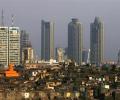
Some of the country's largest listed real estate developers - DLF, Prestige Estates, and Puravankara - are foraying into the Rs 50,000-crore residential property market of Mumbai, where home prices are among the highest in the world. All of them are set to launch residential projects in the financial capital of the country, where the market is dominated by players such as Runwal, Lodha, and Oberoi Realty, among others. Leading the race is Prestige, which has lined up 6 million square feet (msf) of new launches in the city across Mulund and Byculla in the third quarter of this financial year (2021-22).

One of Mumbai's biggest real estate redevelopment projects of Bombay Development Directorate's (BDD's) chawls (large buildings divided into many separate tenements, offering cheap, basic accommodation) has taken off in Central Mumbai, opening up a Rs 20,000-crore opportunity for real estate companies. It is expected to drive down real estate prices in Central Mumbai by up to 25 per cent, forecast real estate experts. Spread over 92 acres in Central Mumbai's prime localities of Worli, Lower Parel, and Dadar and consisting 195 four-storey houses, the BDD chawls were constructed in the 1920s.

Radhakishan S Damani, investor and promoter of the D-Mart supermarket chain, has broken into the elite club of the top 100 global billionaires. Damani, who grew up in a single-room apartment in Mumbai, is now ranked 98th on the Bloomberg Billionaires Index with $19.2 billion as his net worth. The index is a daily ranking of the world's richest people. The other Indians on the top 100 rich list ahead of Damani are Mukesh Ambani, Gautam Adani, Azim Premji, Shiv Nadar, and Lakshmi Mittal.
Leading property developers, such as Oberoi Realty, Tata Realty and Infrastructure, and Hiranandani, have turned to redevelopment of existing buildings in the expensive parts of Mumbai as a way of augmenting revenue. Experts estimate that Mumbai's redevelopment projects could be worth Rs 30,000 crore. As such, they are not new. What is new is that the big developers are interested in them. Leading the race is Oberoi Realty, which has set up a separate team for these projects.

Mumbai, India's financial capital, is set for a mega transformation with a massive patch of land opening up for redevelopment; a new metro railway ready to start services by the year-end; and the country's oldest railway station, the Chhatrapati Shivaji Terminus, going for modernisation with private sector participation. Work on Mumbai's second airport will start from next month, while construction of the sea link connecting central Mumbai to Navi Mumbai has already moved into a fast lane despite Covid-induced lockdowns. Also, a coastal road project, connecting Nariman Point to Worli, is under way and will help decongest the city to quite an extent. Of all these mega infrastructure projects, the one that has a huge potential to change the city's skyline is the Eastern Waterfront project - to be built on the Mumbai Port Trust (MbPT) land.
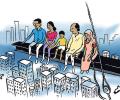
MahaRERA, the authority under Real Estate (Regulation and Development) Act, 2016, in Maharashtra, has blacklisted 644 housing projects in the state for not meeting project deadlines. The authority has prohibited them from being sold, advertised or marketed in the state. These projects were supposed to be completed and handed over to homebuyers in 2017 and 2018. Even though most of the projects are being developed by local developers, one big name on the list is Lavasa Corporation promoted by HCC whose registration expired in 2017.

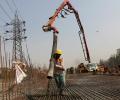
The key demand drivers -- such as low home loan rates and income tax sops, particularly for affordable housing -- that supported the recovery in H2 FY2021, remain in place and will spur recovery again, feel experts.

Mumbai recorded a 4x growth in property registrations on a yearly basis in June this year, as restrictions imposed by the state government ended. Mumbai and its suburbs recorded property registrations of 7,857 units in June, compared to 1,839 units registered in June 2020. The registrations for June were also 39 per cent higher, compared to the same month in the pre-pandemic period of June 2019, said a new report by Knight Frank India.
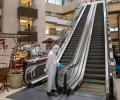
While there was a sharp drop in footfalls in malls in H1FY21, there was reasonable recovery in H2. However, the second wave derailed the recovery.
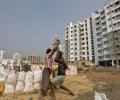
With the arrival of the second Covid wave in April, the numbers fell by almost 50 per cent.

From helping their employees infected with the Covid-19 virus to vaccinating them or supporting the families of those who might have succumbed to the infection, several companies in India are trying to do their bit in this difficult time. Some have even widened their support net to include all stakeholders as well as an extended community. To the families of the employees it lost to Covid-19, Noida-headquartered IT services and consulting company HCL Technologies is, for instance, paying salary for a year, medical insurance for three years and extending support for their children's education for five years.

Consultants who help lease these properties say this is the steepest decline at least in a decade.
 © 2026 Rediff.com - Advertise with us - Disclaimer - Privacy Policy - Sitemap - Feedback - About us - Terms of use - Grievances